
Fayette County Divorce Decree Records
Fayette County divorce decree records are held by the Prothonotary at the county courthouse in Uniontown, Pennsylvania. The Prothonotary maintains civil court files going back to 1783, which makes Fayette one of the older counties in the state for recorded court history. If you need to find or obtain a divorce decree from Fayette County, you can search the court docket online or visit the office in person. Staff can locate cases by name or case number and provide certified copies of any divorce decree on file.
Fayette County Quick Facts
Fayette County Prothonotary Office
The Fayette County Prothonotary is the official keeper of civil court records, including all divorce decrees filed in Fayette County. This office maintains case files from 1783 to the present day. That long history means the Prothonotary holds a wide range of records, from modern divorce cases to older civil matters. Staff can search records by party name or docket number and prepare certified copies of divorce decrees on request.
The courthouse sits in downtown Uniontown at 61 E. Main Street. Walk-in visits are welcome during business hours. You can also call ahead to ask about your case before making the trip. For most requests, you will need the full names of the parties and, if possible, the approximate year the divorce was filed. If the case is older, the Prothonotary may need more time to retrieve physical files from storage.
The office also accepts written requests for copies of divorce decrees. Include the names of both spouses, the filing year, and your contact information. The Prothonotary will confirm fees and turnaround time when you call or write.
| Office |
Fayette County Prothonotary Fayette County Courthouse 61 E. Main Street Uniontown, PA 15401 Phone: (724) 430-1272 |
|---|---|
| Hours | Monday through Friday, 8:30 AM to 4:30 PM |
| Website | fayettecountypa.org/prothonotary |
The Pennsylvania State Archives in Harrisburg also holds some older Fayette County court records. Visit pa.gov/agencies/phmc/pa-state-archives for details on what is available and how to request research assistance for historical cases.
Search Fayette County Divorce Decree Cases
The Pennsylvania Unified Judicial System (UJS) Portal at ujsportal.pacourts.us provides free online access to Fayette County court dockets. You can search by party name, docket number, or other criteria. The results show case information and hearing dates. The portal is free to use and available around the clock. This is the fastest way to confirm whether a divorce case exists in Fayette County before contacting the Prothonotary.
Keep in mind that the UJS Portal shows docket information but not the full contents of the court file. To get a certified copy of a Fayette County divorce decree, you must contact the Prothonotary directly. Certified copies carry the court seal and are the version accepted by government agencies and financial institutions.
Note: Older Fayette County divorce records may not appear on the UJS Portal. Contact the Prothonotary by phone for cases filed before the electronic docket era.
Pennsylvania Court Records Access
The Pennsylvania Courts website explains how public court records are accessed across the state, including Fayette County divorce decree filings. The pacourts.us/public-records page outlines the Public Access Policy for the Unified Judicial System.
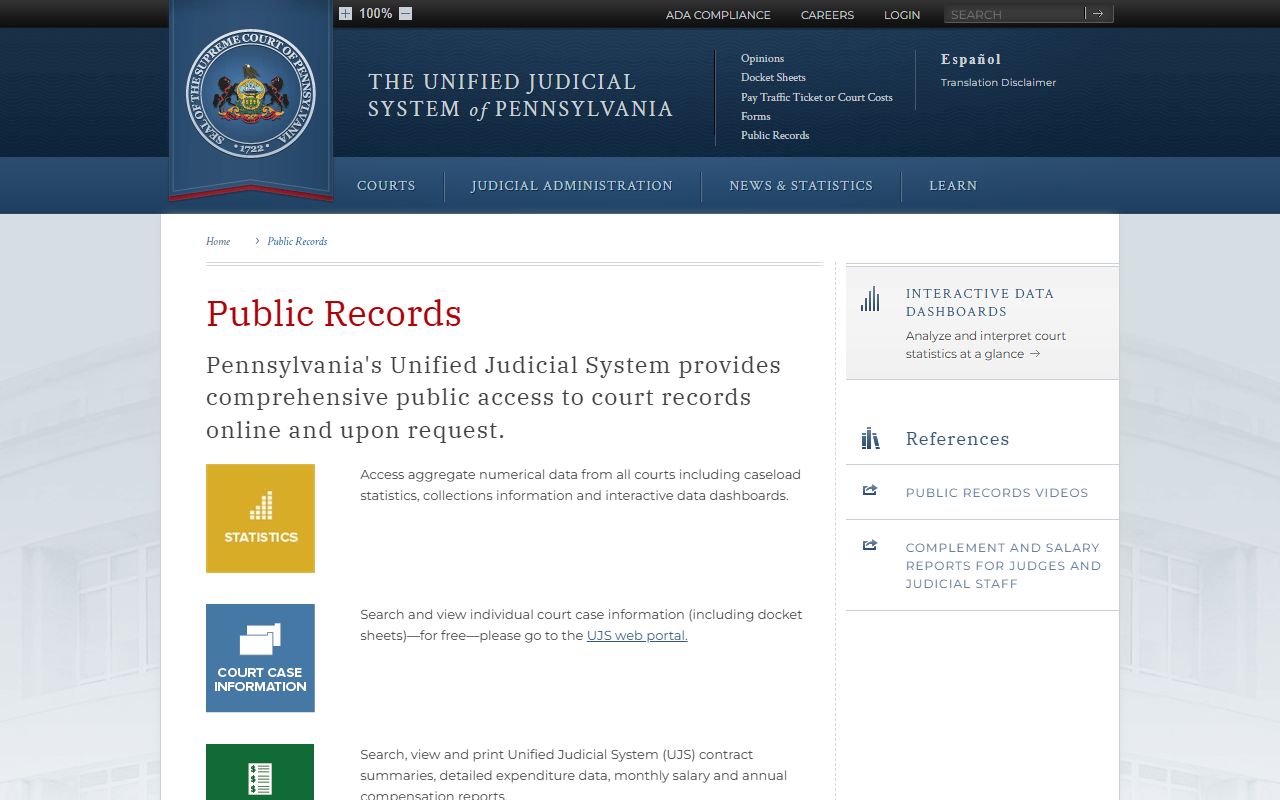
Under the Public Access Policy, most divorce case records are available to the public. Some sealed or confidential portions may be restricted. You can view docket sheets online or request paper copies from the courthouse in Uniontown.
Filing a Divorce Decree in Fayette County
To file for divorce in Fayette County, you begin by submitting a complaint with the Prothonotary at the courthouse in Uniontown. Under 23 Pa.C.S. § 3323, the court issues a final divorce decree after all legal requirements are met. At least one spouse must have been a Pennsylvania resident for six months before the filing date. Filing in Fayette County is proper when either spouse lives in the county.
Pennsylvania offers both no-fault and fault-based divorce grounds. The most common path is no-fault divorce by mutual consent under 23 Pa.C.S. § 3301(c). Both spouses sign an affidavit of consent after a 90-day waiting period, and the court enters the divorce decree. The divorce decree becomes a permanent part of the public record at the Fayette County Courthouse. Each step in the case, from the complaint to the final decree, creates documents that the Prothonotary keeps on file.
Note: Pennsylvania follows equitable distribution of marital property. Claims for property and support should be raised in the same divorce action filed in Fayette County.
What a Fayette County Divorce Decree Contains
A divorce decree from Fayette County is a court order signed by a judge. It states the names of both parties, the date of the order, and the fact that the marriage is dissolved. The decree may also reference related orders on property, support, or custody if those issues were resolved in the same case. The decree is filed with the Prothonotary and becomes part of the public court record in Fayette County.
Beyond the decree itself, the full case file may contain the original complaint, proof of service, affidavits, settlement agreements, hearing transcripts, and any other documents filed during the case. You can request to view the file in person at the Prothonotary office in Uniontown. Certified copies of the decree are available for a fee. Plain informational copies are generally available to any member of the public under the Pennsylvania Right-to-Know Law.
If you need records for genealogy research, the FamilySearch Pennsylvania Divorce Records guide lists sources for older Fayette County cases, including records held at the Pennsylvania State Archives.
Divorce Certificates vs. Decree Copies
Some people confuse a divorce certificate with a divorce decree. They are different documents. The Pennsylvania Department of Health does not issue divorce certificates or decree copies. For a Fayette County divorce, you must contact the Prothonotary in Uniontown to get a copy of the actual decree. The CDC confirms this practice at cdc.gov/nchs/w2w/pennsylvania.htm, noting that divorce copies require an application to the Prothonotary in the county seat where the decree was granted.
The Pennsylvania Department of Health Vital Records office in New Castle handles birth and death records only. They will direct any divorce record requests to the county courthouse. For Fayette County, that means contacting the Prothonotary at 61 E. Main Street, Uniontown.
Legal Resources for Fayette County Residents
If you need help with a divorce case in Fayette County, several resources are available. PA Legal Aid offers free or low-cost legal services to qualifying residents. Their network includes offices that serve southwestern Pennsylvania counties, including Fayette. You can apply online or call to find out if you qualify for help with your divorce case.
The Pennsylvania Bar Association runs a lawyer referral service at (800) 692-7375. This service connects you with licensed family law attorneys who handle divorce cases in Fayette County. Many attorneys offer a first consultation at a reduced rate. The Pennsylvania Courts website at pacourts.us/public-records also has forms and instructions for people who represent themselves in court.
Note: Court staff at the Fayette County Prothonotary can assist with filing procedures but cannot give legal advice about your case.
Online Docket Search for Fayette County Cases
The Pennsylvania Unified Judicial System portal gives public access to Fayette County divorce decree dockets and case information. The screenshot below shows the UJS portal, sourced from ujsportal.pacourts.us.
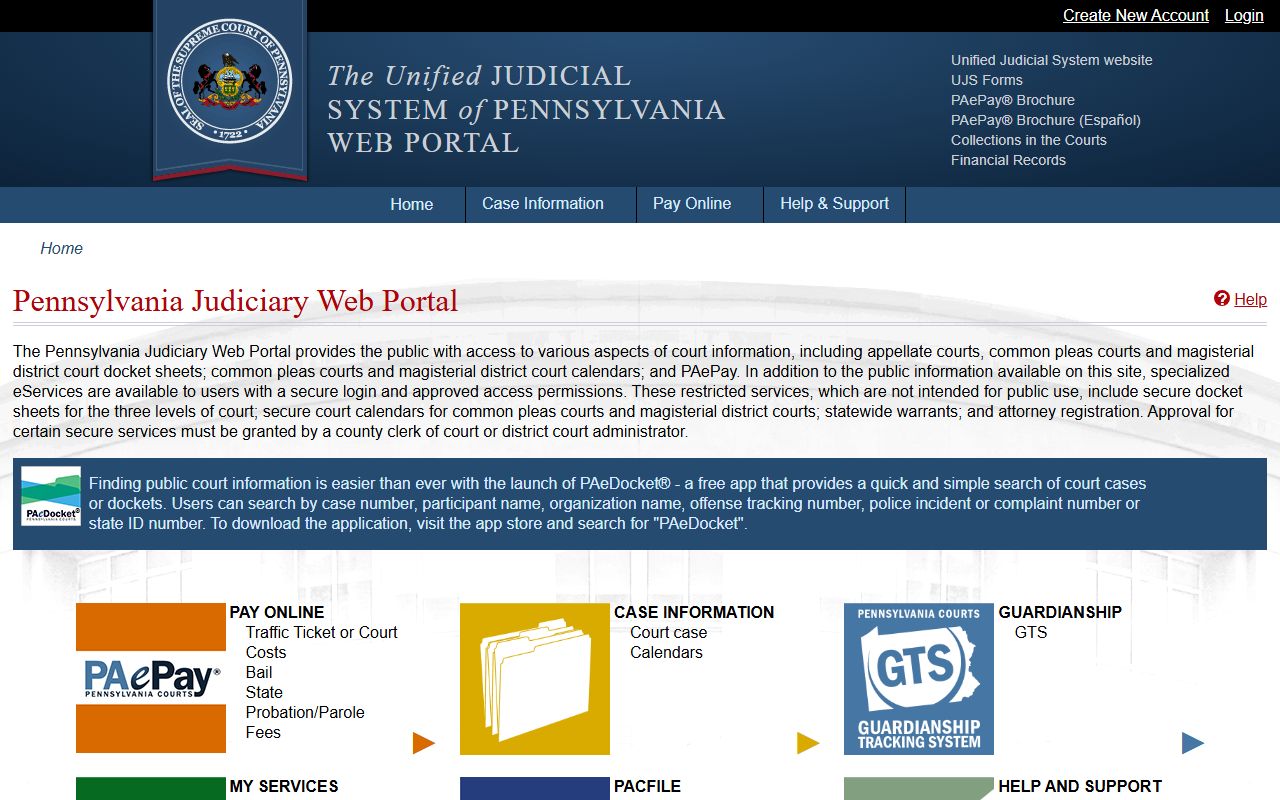
Use the name search or docket number search to find Fayette County divorce cases. The portal is free and available without registration. Results show docket entries, case status, and related hearing dates.
Nearby Counties
Fayette County borders several other southwestern Pennsylvania counties. If you are unsure which county courthouse holds your divorce record, check where the parties lived at the time of filing. You must search in the county where the divorce was granted.