
Erie Divorce Decree Case Records
Erie divorce decree records are filed and maintained by the Erie County Prothonotary at the Erie County Courthouse in Erie, Pennsylvania. Erie County handles all divorce filings for residents of Erie and the surrounding area. The Family Division of the Erie County Court of Common Pleas oversees divorce, custody, and related family matters. Once a judge enters a divorce decree in Erie, the record is stored at the courthouse and available to the public. You can search Erie divorce records online or visit the Prothonotary in person to request copies.
Erie Quick Facts
Erie County Courthouse for Divorce Records
The Erie County Courthouse at 140 West 6th Street is the home of all Erie divorce records. Both the Court of Common Pleas and the Prothonotary office are located at this courthouse. The Prothonotary maintains all civil and family court records, including every Erie divorce decree on file. You can visit in person or call to ask about your options for searching or requesting copies.
| Court | Erie County Court of Common Pleas |
|---|---|
| Court Address | 140 W 6th St, #120 Erie, PA 16501 |
| Court Phone | (814) 451-6250 |
| Prothonotary Address | 140 West Sixth Street, Room 123 Erie, PA 16501 |
| Prothonotary Phone | (814) 451-6264 |
| Website | eriecountycourt.org |
The Prothonotary and the Court are both inside the Erie County Courthouse. This makes it easy to file papers and pick up copies in one visit. Bring your case number or party names when you go. Staff can search Erie divorce records by name or case number. Call ahead at (814) 451-6264 to confirm hours and what to bring.
Erie County Prothonotary for Divorce Filings
The Erie County Prothonotary online portal provides case search access for Erie divorce decree and other civil court records.
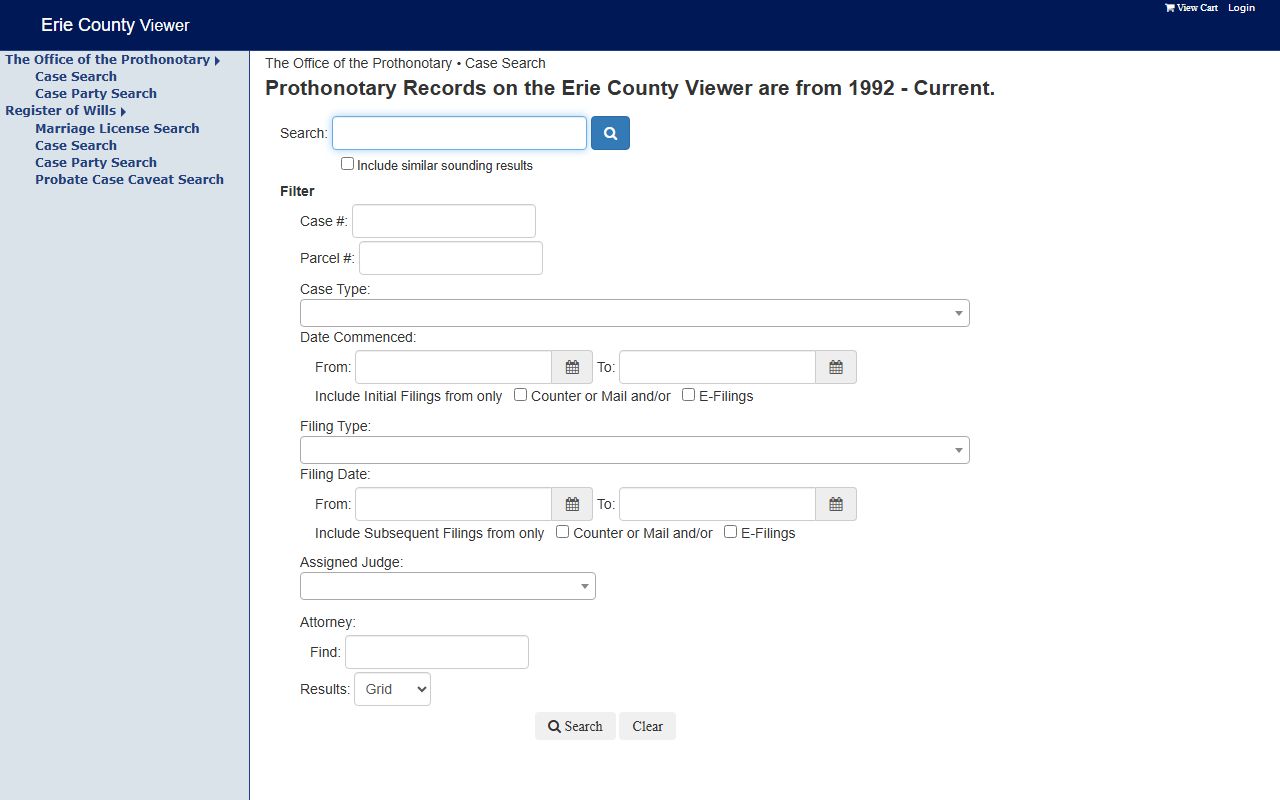
The online portal at courtpro.eriecountypa.gov allows case searches for Erie County divorce and family court filings. You can look up Erie divorce cases by name or docket number at no cost for basic case information.
How to Search Erie Divorce Records
You can search Erie divorce records online through the Erie County Prothonotary portal at courtpro.eriecountypa.gov. This portal gives online case search access for Erie County civil and family court filings. The record search fee in person is $20 per name. For online searches of basic case information, there is no charge.
The Unified Judicial System Portal at ujsportal.pacourts.us also covers Erie County. You can search by party name or case number. The portal shows case status, filing dates, and party names. For copies of actual documents from an Erie divorce decree, contact the Prothonotary directly.
In person visits to the Prothonotary at Room 123 in the Erie County Courthouse allow you to review case files and order certified copies. Bring the full name of at least one party and the approximate year of the Erie divorce. Staff can search older records as well. The Clerk of Records also maintains marriage records from 1885 to the present, which may be useful when researching Erie divorce history.
Note: Register of Wills and Orphans' Court records available through the online Erie County viewer cover cases from 1994 to current. For older Erie divorce records, contact the Prothonotary office directly.
Erie County Court of Common Pleas
The Erie County Court of Common Pleas is the trial court that hears and decides all divorce cases for Erie and the rest of Erie County.
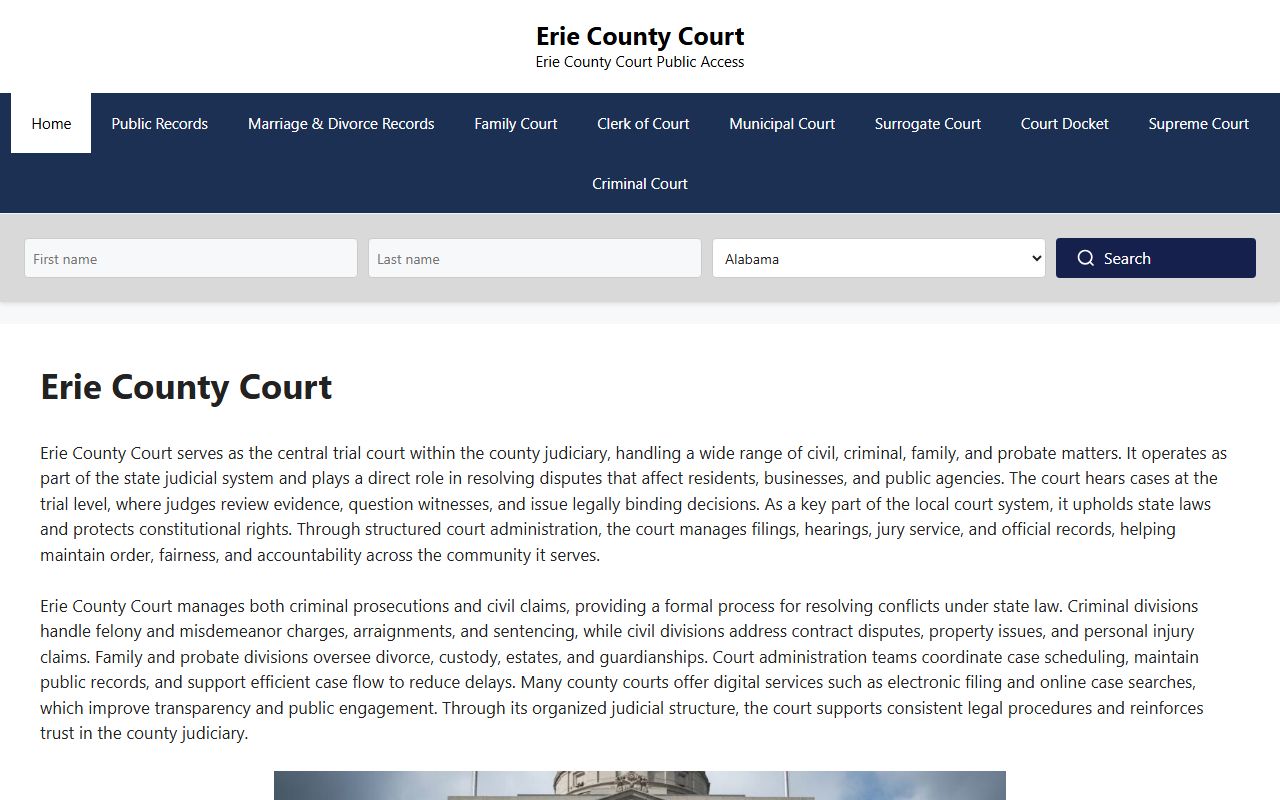
The court's Family and Probate divisions oversee all Erie divorce, custody, estate, and guardianship matters. A judge in the Family Division signs every Erie divorce decree before it becomes final.
Filing for Divorce in Erie, PA
To start a divorce case in Erie, you file a complaint in divorce at the Prothonotary's office in the Erie County Courthouse. At least one spouse must have been a Pennsylvania resident for six months before filing. You pay the required filing fee at the time of submission. The Prothonotary stamps your papers and gives you a case number for the Erie divorce action.
Pennsylvania law provides two no-fault divorce paths. Under mutual consent, both spouses sign affidavits after a 90-day waiting period. Under irretrievable breakdown, you must show the marriage has been irreparably broken and the spouses have been separated for one year. Fault grounds also exist under Pennsylvania Divorce Code Title 23. Erie residents must meet one of these grounds before the court can enter a final decree.
You must serve your spouse with the Erie divorce papers after filing. Service methods include the county sheriff, a private process server, or certified mail with return receipt. Proof of service must be filed with the Prothonotary and becomes part of the Erie divorce record. Cases cannot proceed without proof that the other spouse was properly served.
Once the waiting period passes and all required documents are filed in Erie, the Prothonotary transmits the record to the judge. If both parties agree on all issues, the court enters the decree. The judge signs the Erie divorce decree, and it is filed as a public record. Certified copies are then available from the Prothonotary at the courthouse on West 6th Street.
The Pennsylvania Rules of Civil Procedure, Chapter 1920 governs all steps of an Erie divorce. These rules set out the form of the complaint, service requirements, notice procedures, and the form of the final decree.
Legal Help for Erie Divorce Cases
Erie residents who need help with a divorce have options in the community. Pennsylvania Legal Aid at palegalaid.net serves Erie County and offers free legal help to those who qualify based on income. Services may include advice on divorce law, help completing forms, and assistance at court hearings in Erie.
The Erie County Bar Association runs a lawyer referral service for residents who need a family law attorney in Erie. You can also reach the Pennsylvania Bar Association referral service at 1-800-692-7375. Many Erie attorneys offer free initial consultations for divorce matters.
Court forms for an Erie divorce are available through the Pennsylvania courts system at pacourts.us/public-records. These include the complaint in divorce, consent affidavits, and related family law forms. All forms are free to download and print. Staff at the Erie County Courthouse can tell you which forms apply to your case but cannot provide legal advice.
Under 23 Pa.C.S. § 3105, any agreement reached in an Erie divorce about property, support, or custody has the legal effect of a court order once approved. This makes written settlement agreements important tools for resolving Erie divorce cases without a full trial.
Erie Divorce Records and Pennsylvania Vital Statistics
The Pennsylvania Department of Health does not issue copies of divorce decrees for Erie or any other Pennsylvania county. For an Erie divorce decree, you must go to the Erie County Prothonotary. The Department of Health at pa.gov/agencies/health/programs/vital-records directs all such requests to the county courthouse.
The CDC's guide to Pennsylvania vital records at cdc.gov/nchs/w2w/pennsylvania.htm confirms that Erie divorce record copies must be requested from the Prothonotary in Erie County. The cost of copy fees varies by county. For Erie County, contact the Prothonotary at (814) 451-6264 to confirm current rates before submitting a request.
For historical Erie divorce research, FamilySearch at familysearch.org provides guidance on finding older Pennsylvania divorce records. Erie County divorce records go back well before the electronic era. The Prothonotary can help with research requests for older files.
County Court for Erie
All Erie divorce cases are handled by the Erie County Court of Common Pleas. The Erie County Courthouse on West 6th Street is the official filing location for all Erie divorce decree records.